
It is impossible to overestimate the significance of safe, dependable, and reasonably priced packaging in a world where online shopping has become commonplace. The packaging you select has a significant impact on how safely your product gets to its destination, whether you’re shipping fragile goods, documents, electronics, or small accessories. For this reason, cardboard packaging has gained popularity among small-scale producers, companies, and home sellers. Today’s cardboard options provide strength, adaptability, and sustainability without sacrificing affordability, from cardboard postal boxes to postage boxes and envelope boxes.
Let’s examine why cardboard packaging is ideal for safe delivery and how the various box types work to ensure every package is entirely secure.
The Power of Cardboard: Lightweight, Strong & Reliable
Despite its straightforward appearance, cardboard is designed to be durable. Because of its strength and light weight, the structure is ideal for transportation. Because cardboard strikes the perfect balance between cost and performance, it cushions, protects, and absorbs shock, which is why so many businesses use it for packaging. In addition, cardboard is recyclable, biodegradable, and environmentally friendly. Choosing cardboard demonstrates your concern for both reducing environmental impact and ensuring safe delivery, in a time when consumers place a high value on sustainability.
Various Cardboard Box Types and How They Work
There isn’t a single, universal shape for cardboard. You can select from a variety of designs, depending on what you’re shipping. Here’s a thorough examination of some of the most dependable choices.
Compact & Protective: Cardboard Postal Boxes
Cardboard postal boxes are among the most popular choices for online retailers. These boxes are small, simple to put together, and made especially for effective mailing via postal services.
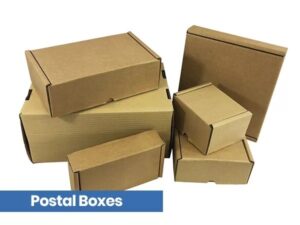
Why are they so practical:
· Ideal for small electronics, watches, phone cases, cosmetics, books, and accessories.
· Their stiff design shields items from dents, pressure, and external impacts.
· Even with rough handling, the box remains sealed thanks to the flap-locking mechanism.
These boxes are popular among small businesses and home-run online stores because they are lightweight and provide robust protection while lowering postage costs.
Protective and Versatile Envelope Boxes
Envelope boxes are another crucial component of packaging options; they are flat, strong, and ideal for posting documents or thin items. When it comes to books, artwork, printed photos, or paperwork that needs to be delivered to the customer undamaged, they perform admirably.
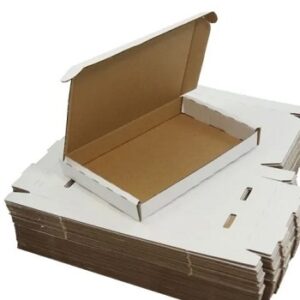
Why are they so practical:
· Delivery expenses are decreased by their thin design.
· They are simple to store and stack.
· Delicate paper goods are kept flat and safe by their stiff construction.
Envelope-style packaging is protective and professional for companies that send certificates, small art prints, or thin merchandise.
Standard Mailing Cartons for Bigger Shipments
Standard cardboard cartons remain the best option for larger, bulkier items. To secure goods during transit, these robust boxes are used in conjunction with other packaging materials such as void fill, kraft paper, and cushioning.
Why are they so practical:
· During handling, their double-layered fluting absorbs impact.
· They comfortably fit irregularly shaped objects.
· For optimal safety, they can be tightly sealed.
These cartons offer unparalleled dependability, whether a seller is packing numerous articles of clothing, tools, home décor, or larger accessories.
Why Cardboard Ensures Safer Deliveries?
Cardboard packaging is a protective system that lowers the risk of damage at every stage of transit, making it more than just a box.
Absorption of Shock
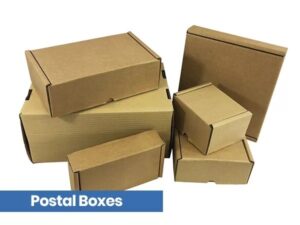
During courier handling, cardboard’s multi-layered structure helps absorb pressure, drops, and knocks. When working with cardboard postal boxes or postage boxes, which are frequently used for delicate or expensive items, this natural cushioning is extremely helpful.
Strong but Lightweight
Cardboard is surprisingly robust, even though it’s light enough to keep shipping costs down. It ensures the weight doesn’t increase shipping costs while maintaining package integrity.
Eco-Friendly Option
Cardboard remains popular as businesses and consumers move toward sustainability. It is one of the most environmentally friendly packaging materials available because it is recyclable, biodegradable, and often made from recycled fibres.
When to Use Each Type of Box
Making the correct box choice can mean the difference between a successful delivery and a damaged package. Here is a brief guide to help you make the ideal decision:
· For small, non-fragile items such as handmade goods, lightweight items, tiny gadgets, and small accessories, use cardboard postal boxes or postage boxes.
· For things that must stay flat, such as books, framed prints, documents, calendars, or pictures, use envelope boxes.
· When shipping bulky, heavy, or multi-piece items that need more internal space and padding, use larger cartons.
Maximum protection can be achieved by combining these with the appropriate packaging materials, such as bubble wrap, kraft paper, packing peanuts, and sturdy tape.
Final Thoughts
Reliable packaging will always be necessary for shipping tangible goods, regardless of how digital the world gets. Cardboard still rules the industry because of this. Reliability is indicated by cardboard’s lightweight, protective, economical, and ecologically friendly qualities. Cardboard streamlines the entire shipping process while maintaining packages’ safety, professionalism, and appearance.
This is true whether using cardboard postal boxes, sturdy mailing cartons, slim envelope boxes, or special designs for high-end items. When you combine that with the appropriate packaging materials, you have a safe delivery system that both customers and businesses can rely on. Cardboard packaging is a commitment to safe, intelligent, and environmentally friendly delivery—it’s more than just a shipping option.